

This report examines the career experiences of researchers working across the health services research (HSR) landscape, highlighting the structural, cultural and personal factors that shape progression, inclusion and long‑term sustainability in the field. Drawing on evidence from a literature review, national survey and in‑depth interviews, it explores how precarity, workload pressures, inequity and uneven access to support create persistent challenges that risk limiting who can enter, thrive and remain in HSR.
The research brings together insights from 32 academic and grey literature sources, responses from 248 survey participants across academia, the NHS and the third sector and 18 qualitative interviews with researchers at different career stages. Taken together, this mixed‑methods evidence base provides a rich, triangulated understanding of the barriers and facilitators shaping HSR careers. This includes the impact of fixed‑term contracts and funding gaps, the importance of mentoring, organisational culture, tacit knowledge and equitable support structures.
We are grateful to the Health Foundation for supporting this work, and to everyone who shared their experiences through the survey, interviews and stakeholder workshop. Their contributions were vital in shaping the findings and recommendations presented in this report.
Key messages of the report include:
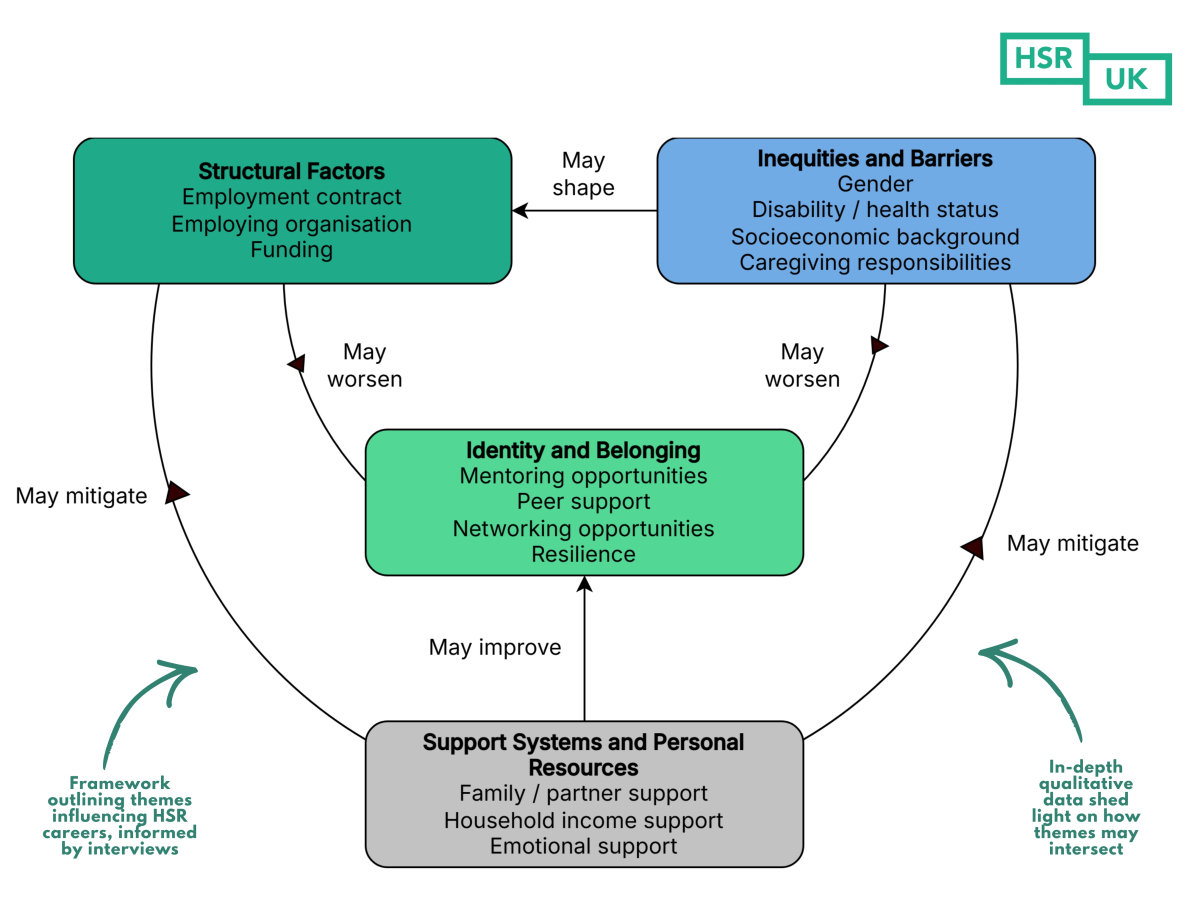
Precarity is systemic and limits career progression
Short‑term contracts, funding gaps and unclear progression pathways create chronic instability, which is harmful to career satisfaction, long‑term planning and retention across the HSR workforce.
Structural inequalities persist and intersect
Gendered caregiving roles, disability‑related barriers, class‑based norms and uneven access to informal networks shape who feels able to progress and who feels excluded.
Mentoring, networks and supportive cultures are transformative but unevenly accessed
Good line‑management, mentoring and peer support significantly improve career experiences, yet access often depends on luck, local culture and personal networks.
Tacit knowledge shapes careers and drives inequity when hidden
Unwritten rules around funding, progression and research identity are crucial to navigating HSR careers, but access to this knowledge is not equally distributed.
Belonging is fragile, especially across sectors
Researchers working between academia, the NHS and third sector often struggle to feel fully part of any one system, reflecting broader issues around identity and integration within HSR.
System‑level change is needed
Improving HSR careers requires stabilising employment structures, widening access to mentoring, addressing inequities structurally and fostering inclusive, healthy research cultures across all sectors.
Download the full report here.
Download the executive summary here.
Authors:
Dr Jenny Wheeldon, Research & Engagement Officer, HSR UK
Dr Cat Chatfield, Director, HSR UK