There is no single route into or through a career in Health Services Research. Alongside formal qualifications and career pathways, researchers often rely on advice, experience and insights that are rarely written down but can make a significant difference to career progression. HSR UK's Careers Inclusion Research identified this "hidden" or tacit knowledge as a recurring theme, particularly for researchers who may not have easy access to informal networks, mentors or senior supporters.
In this blog series, researchers from across the HSR community share lessons from their own careers, helping make unwritten rules more visible. In this blog, Dr Emily Wood, Senior Research Fellow at the University of Sheffield, reflects on some of the practical things she wishes early career researchers knew.

Dr Emily Wood, Senior Research Fellow, University of Sheffield
Dr Jenny Wheeldon, Research and Engagement Officer, HSR UK
Building a Career in Health Services Research
HSR UK's Careers Inclusion Research Report found that many researchers experience careers that are shaped by short-term contracts, funding uncertainty, unequal access to mentoring and heavy reliance on informal networks. Across surveys, interviews and stakeholder discussions, researchers repeatedly highlighted the importance of supportive managers, sponsorship and access to insider knowledge when navigating career progression. Yet these opportunities were often described as unevenly distributed and difficult to access without the "right" connections.
Emily: Being an early career researcher (ECR) is a stressful place to be. It usually means being on a short-term temporary contract, and relying on the lead researcher to think to include you in future grant applications.
Emily's comments reflect one of the strongest themes identified through the Careers Inclusion project. Contract precarity, particularly within universities, was identified as a systemic issue affecting career satisfaction, life planning and progression. Researchers frequently described moving between fixed-term contracts and relying on future grant funding to remain employed.
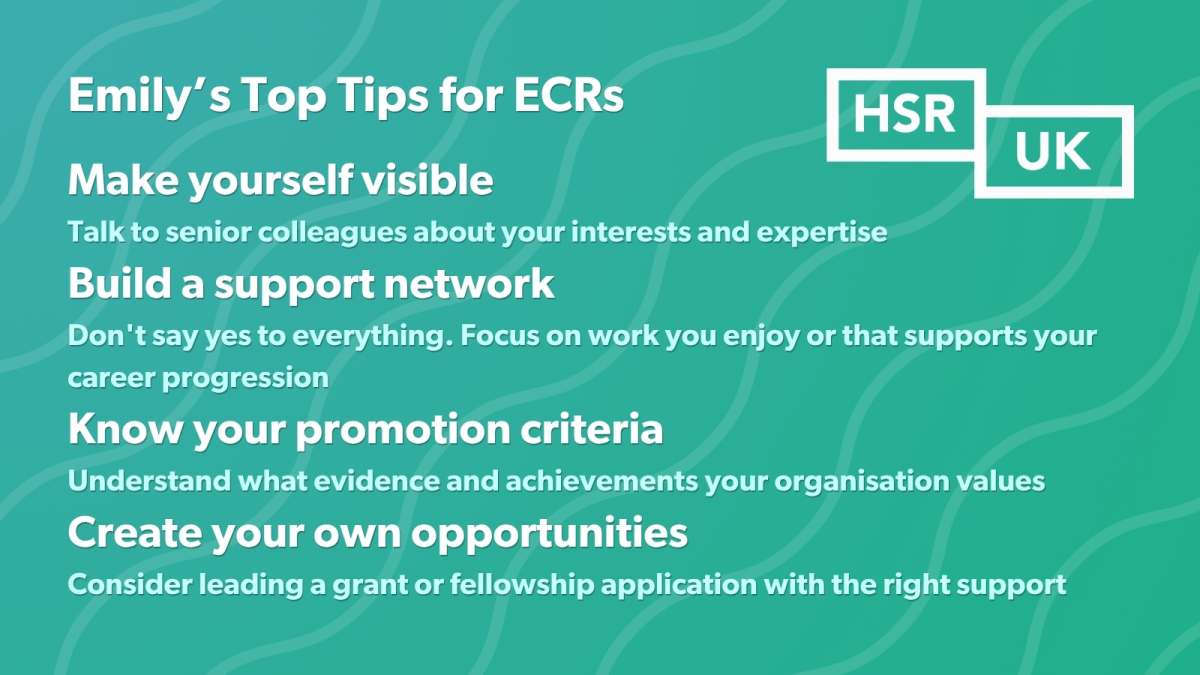
Emily: There are, however, things that you can do to improve your situation. Talk to the senior researchers. Make sure people know what you are interested in and where your expertise lies. Your current PI will know this but do your other senior colleagues? It is always better to be named on too many grant applications rather than too few!
This advice reflects another major theme from our research: visibility matters. Workshop participants repeatedly highlighted the importance of relationships, networks and informal conversations in creating opportunities. While uncomfortable to acknowledge, many researchers reported that career progression often depended on being visible to the people making decisions about projects, grants and collaborations.
Emily: The other option is to take control of your own destiny and lead your own grant/fellowship application. This will need a supportive team of senior colleagues. If that is not your line manager, see who else is around that might want to work with you.
Across HSR UK's research, mentoring and sponsorship emerged as some of the most powerful facilitators of career progression. However, participants frequently noted that access to good mentorship was inconsistent. Researchers often attributed career success not solely to talent or effort but to having someone willing to open doors, share knowledge and support applications.
Participants also highli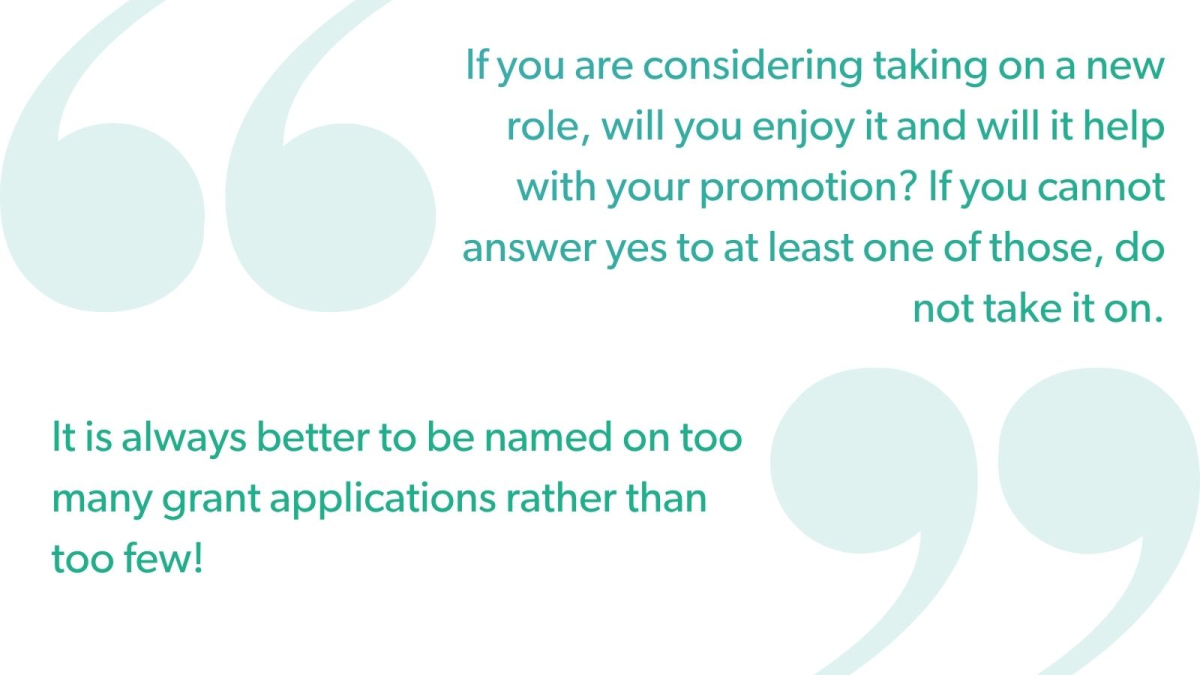 ghted the importance of role models who could demonstrate different career pathways, particularly for researchers from underrepresented backgrounds or those pursuing non-traditional routes.
Emily: Taking on extra work? I was told to take on additional responsibilities to "make myself indispensable" as an ECR. I would agree with this but only to a certain extent.
It is very easy to end up taking on too much. However, if you are doing lots but none of it very well because you are overworked, that won't help you. My advice: be strategic. I tell my colleagues if you are considering taking on a new role, will you enjoy it and will it help with your promotion? If you cannot answer yes to at least one of those, do not take it on. It is not serving you.
This advice speaks directly to another recurring finding from the Careers Inclusion project: the sector's reliance on researchers' personal resilience. Researchers frequently described working evenings, weekends and beyond contracted hours to remain competitive. Stakeholders repeatedly questioned whether success in HSR was too often dependent on individuals being willing or able to do unpaid work, take on additional responsibilities, or absorb increasing workloads.
Importantly, participants highlighted that this expectation is not experienced equally. Researchers with caring responsibilities, disabilities, long-term health conditions or fewer financial resources may have less capacity to engage in additional unpaid activities, creating structural inequalities in career progression.
Emily: Know your promotion criteria. Academic promotion panels often have clear guidelines to follow; know what they are, know what you are good at, and know where you have gaps in your CV. Then when an opportunity arises to fill that gap, take it.
This advice illustrates how tacit knowledge shapes career progression. During our workshop, participants discussed how many aspects of career progression are not formally taught, including promotion expectations, what counts as evidence of leadership, how to build a research niche, and how to position yourself for the next career stage. Access to this information was often reported as dependent on mentors, supportive managers or existing professional networks.
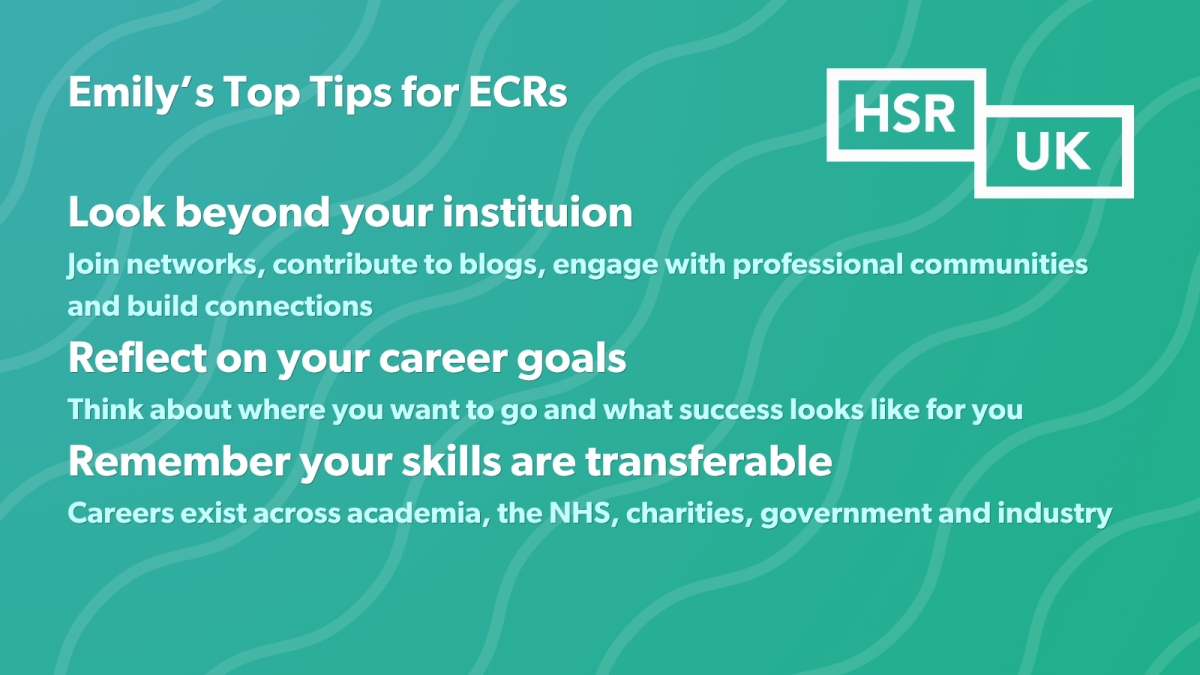
Emily: Look for external opportunities. Write a blog for HSR UK, be an external examiner, join a methods network. There are lots of opportunities, most of them no longer require travelling, and if you are not sure, ask.
The importance of looking beyond immediate workplaces was echoed by participants across the project. Networks, conferences, mentoring schemes and professional communities were consistently identified as valuable sources of information and opportunity. However, participants also highlighted barriers including travel costs, caring responsibilities, disability and neurodiversity.
Researchers emphasised the importance of creating accessible opportunities that do not rely on attendance at large in-person events. Increasingly, online communities can provide routes to connection that are more equitable and accessible.
Emily: Reflect on where you want to go in your career. Do you want to do research, teach, a bit of both, or leave the University altogether? There are lots of places from the NHS to pharmaceutical industry, the civil service, private sector research companies, who all want the skills you have gained so far.
Dr Emily Wood, Senior Research Fellow
This reflection highlights an important challenge for health services research: ensuring that inclusion goes beyond listening and leads to meaningful change. Creating more equitable careers requires more than opportunities for people to share their experiences. It requires organisations to act on what they hear, create genuine opportunities to influence decisions, and recognise the diverse contributions that researchers bring to the sector.
We hope these reflections encourage researchers, leaders and organisations to consider how they can strengthen inclusive cultures, share power more effectively and ensure that lived experience helps shape the future of health services research careers.