Many of the factors that shape a successful career in Health Services Research are never formally taught. Researchers learn them through experience, observation and informal conversations with colleagues. For neurodivergent researchers, these unwritten expectations can create particular challenges, not because they lack the skills to succeed, but because workplaces are often designed around neurotypical assumptions about communication, organisation and professionalism.
HSR UK's Careers Inclusion project identified neurodiversity as an important but often under-discussed aspect of research careers. To explore this further, we brought together three contributors from the HSR community to reflect on their experiences of dyslexia, autism and neurodivergent ways of thinking. Their stories are different, but together they challenge assumptions about what success in research looks like and how it is achieved.
About the contributors
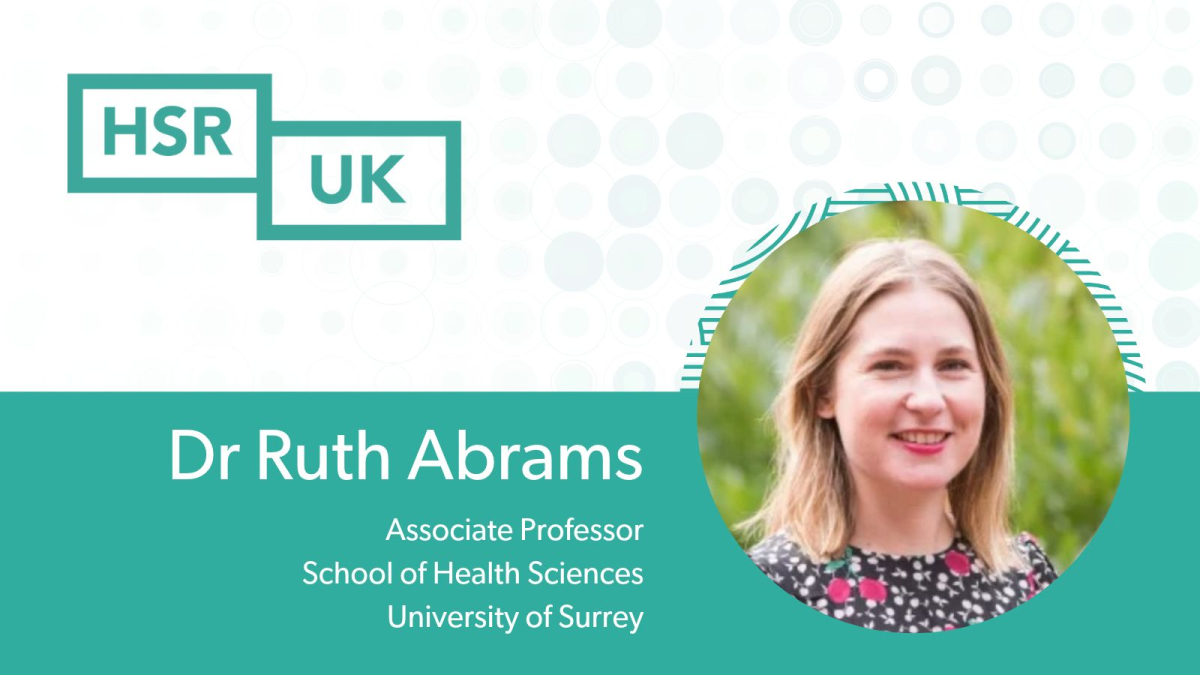
Dr Ruth Abrams is an Associate Professor in the School of Health Sciences at the University of Surrey and an organisational psychologist whose research focuses on creating healthy, sustainable and equitable healthcare workplaces. Her work examines how workforce, organisational and system factors shape staff wellbeing, retention and service delivery, with particular interests in primary care workforce development, women in healthcare and research culture.
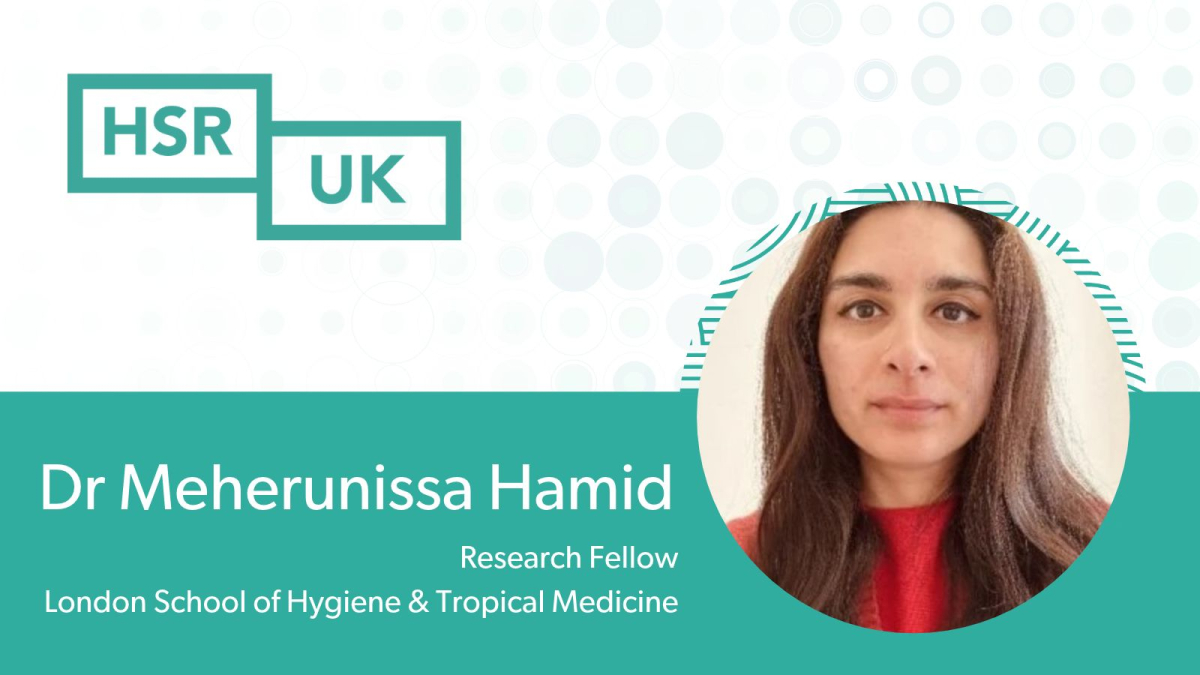
Dr Meherunissa Hamid is a Research Fellow at the London School of Hygiene & Tropical Medicine. Her research explores social care, immigration policy and the intersections of gender, race and inequality within the care workforce. She is also involved in patient and public involvement and engagement through the NIHR Health Protection Research Unit in Climate Change and Health Security.
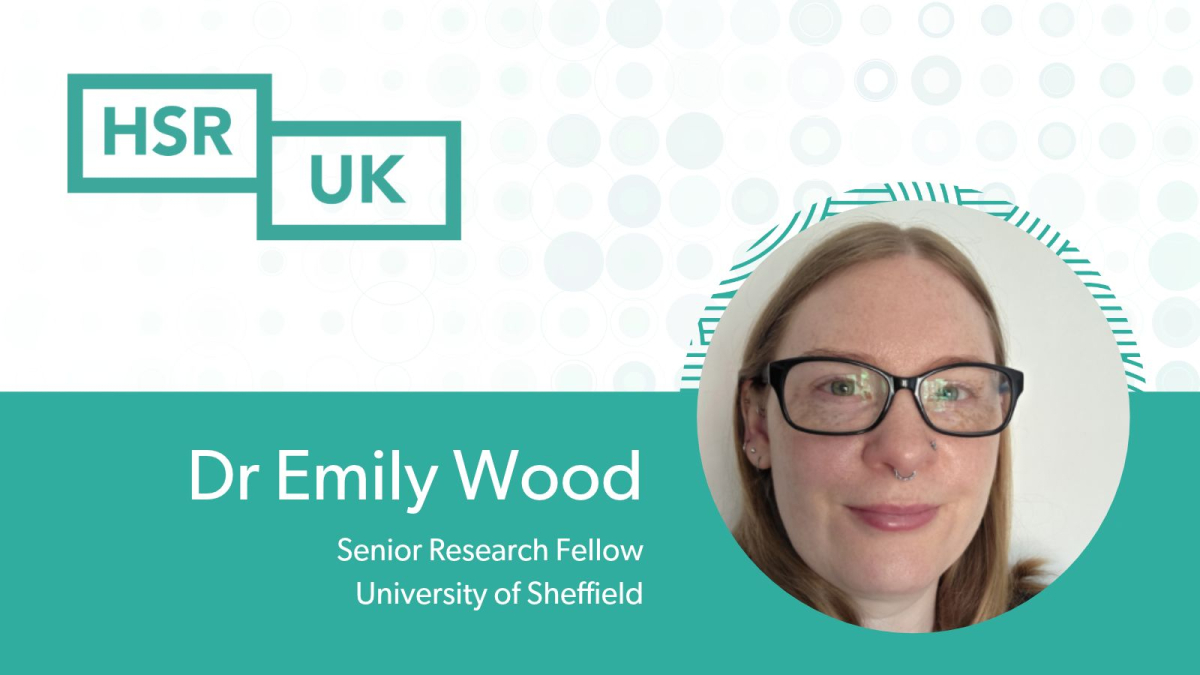
Dr Emily Wood is a Senior Research Fellow in Mental Health at the University of Sheffield and Deputy Lead of the Mental Health Research Unit within the Sheffield Centre for Health and Related Research (SCHARR).
Thriving and struggling at the same time
One of the strongest themes across our contributors' reflections was the tension between capability and difficulty. Success in research does not necessarily mean that someone finds the way research workplaces operate easy to navigate.
Ruth describes this as a particularly fundamental tension:
 "For many of us who are neurodivergent, when we place ourselves in the workplace, our automatic starting point is one of failure. This is not the same as imposter syndrome (although I imagine many can relate to these feelings through this lens); it is both conceptually and physiologically different.
Being neurodivergent at work, and having a career in HSR allows you to both thrive and fail in the same breath. This is such a common backdrop to being neurodiverse, this feeling of coming up short, of not quite getting it right, whilst also having unique strengths, that it can be incredibly hard to articulate what help you need. Instead you find yourself in a perpetual state of tension."
This tension challenges a common assumption about career progression: that those who are succeeding must, by definition, be finding the environment supportive and accessible.
For Meherunissa, some of these experiences began long before entering academia:
 "My greatest frustration was that at school I worked hard and spent a lot of time trying to understand things, but some concepts simply did not make sense to me, or I was unable to grasp them. When it came to taking exams, I was not a high achiever, but I knew I could be, which really upset me. I could not understand why this was happening. I knew that I was not doing something 'correctly', based on a normative definition of what was correct. I also knew that I was not being taught in a way that helped me understand."
These experiences raise a broader question for HSR: how many assumptions about what a successful researcher looks like are based on a relatively narrow idea of how people should learn, communicate and work?
The hidden challenge of disclosure
One of the most significant hidden decisions for neurodivergent researchers is whether to disclose. Many researchers spend substantial parts of their careers without sharing their diagnosis, either because they have not yet received one or because they are uncertain about how disclosure will be perceived.
Meherunissa describes the stigma that shaped her decision:
"I think there is a lot of stigma, and people do not always understand what dyslexia means. There is often a connotation with any form of neurodivergence that there is something wrong with the person, or questions such as, 'Is there a cure?' I think that was something I did not want to deal with, so I did not disclose it and simply kept going."
Disclosure is therefore not simply an administrative decision about accessing support. It can involve weighing up potential benefits against concerns about how colleagues might interpret difference. For Meherunissa, this remains relevant even now:
"Even now, very few people around me at work know, because I still have a feeling that it might hold me back. But I have begun to talk about it where I know my experiences may benefit others."
For others, the challenge is that there may not have been anything to disclose earlier in their careers. Emily explains:
 "I only learnt I was autistic last year so I have spent most of my academic life not knowing and not being properly supported."
This raises an important issue for employers and managers. Support cannot depend entirely on formal disclosure, because some researchers may not yet have a diagnosis, may not identify as neurodivergent, or may simply not feel safe telling people.
As Meherunissa puts it:
"That person may not be the only individual with a neurodivergent way of thinking. Others may not have disclosed it, may be hiding it, or may not yet know that they are neurodivergent."
If support is only available once someone has disclosed, a significant proportion of need may remain invisible.
Neurodiversity is not a deficit
The contributors also challenge another assumption that can shape conversations about inclusion: that neurodiversity is primarily a problem to be managed.
Emily puts this directly:
"Too much written about neurodiversity focuses on the negatives but we are not deficient, we are just different. Sometimes we need support, but that is because the workplace is designed for neurotypical people, not because we are wrong."
This distinction matters. If neurodivergence is understood primarily as a deficit, the responsibility for adapting sits with the individual. They are expected to identify what is “wrong”, seek support and find ways to fit into existing systems. But if different ways of thinking are recognised as potentially valuable to research, the question changes. Instead of asking only how researchers can adapt to existing ways of working, we can also ask what HSR gains when different ways of thinking are genuinely included.
Emily highlights several examples:
“When undertaking analysis or problem solving, multiple viewpoints and different ways of thinking can be hugely important.”
She identifies pattern recognition as one potential strength:
“Pattern recognition – autistic people often have excellent pattern recognition skills and may see links in data that neurotypical people often miss.”
She also describes the value of allowing people to develop deep expertise in areas that interest them:
“Subject interest – encouraging neurodivergent staff to follow their interests will lead to you having a subject matter expert in your research team.”
And she challenges the assumption that established ways of working should always be followed:
“Breaking rules – many neurodivergent people will break rules, sometimes they didn’t know the rule existed, sometimes they knew about it but thought it was wrong so ignored it. This can lead to new ways of doing things and new ways of thinking that upset the status quo and lead to breakthroughs.”
These are not simply individual benefits. They have implications for research teams and organisations. A research environment that values conformity above curiosity, for example, may inadvertently suppress some of the very characteristics that can contribute to new ideas and different approaches to research.
Meherunissa similarly identifies strengths in her dyslexic thinking:
“I definitely think my dyslexic thinking has helped me take on more work and challenge myself. I have the ability to manage many different tasks, I work well with deadlines, and I am able to produce and deliver work by a given deadline.”
And:
“I am very good at identifying patterns when I see numbers together.”
When strengths become challenges
Recognising strengths does not mean romanticising neurodiversity or suggesting that particular characteristics are always beneficial. The same ways of thinking that can support research can also become difficult when the working environment does not provide sufficient flexibility or support.
Ruth describes the potential tension around being highly focused:
"One tension that may exist, particularly with a research career, is it allows a neurodivergent person to be incredibly monotropic. This can be great in terms of profile building, reputation, and being known for something, but it can also kill creativity, and lead to burnout because you do the same thing repeatedly until the point of exhaustion."
She gives a particularly familiar example from academic research:
"I know I can find it incredibly hard to step away from grant writing, to concentrate on other areas of the job that require my attention. Grant writing has a secure template, a pattern to follow and clear, set stages to progress through. It's also compulsive. Pulling myself away from this can sometimes feel physically painful, even though it's necessary."
Meherunissa describes a different experience of pressure:
"The biggest impact my dyslexia has had is that I become overwhelmed by the number of tasks I expect myself to complete in a given time. Things that could be done later, I expect myself to do earlier, and that leads to feeling overwhelmed."
These accounts complicate the idea of “strengths” and “weaknesses”. A characteristic can be highly valuable in one context and difficult in another. The question is therefore not simply which characteristics a researcher has, but whether their working environment allows those characteristics to be used sustainably.
What helps?
The contributors repeatedly highlighted accommodation, flexibility and understanding. But importantly, these are not necessarily complicated interventions.
For Ruth, preparation can make a significant difference:
"Having scripts for one-to-one conversations, and rehearsal/prep time for meetings and chairing responsibilities all help, but the ability to do this well, and to feel safe becomes compromised with last minute requests or changes."
This illustrates how seemingly small differences in how work is organised can have significant consequences. Meherunissa describes how communicating her needs during her doctoral viva helped create a more supportive environment:
"I was very clear with the administration that I wanted them to tell my examiners that I am dyslexic and that it may take me some time to answer questions and get to the point. That is simply how it is."
There is something important in the final sentence: “That is simply how it is.”
The accommodation did not change her knowledge or expertise. It changed the conditions under which she was expected to demonstrate them. This is a useful distinction for HSR careers more broadly. Inclusion does not necessarily mean lowering expectations. It can mean removing unnecessary barriers to meeting those expectations.
Ruth describes this as requiring a particular organisational mindset:
“Designing HSR careers to be inclusive for neurodiverse people requires a degree of, in the words of Gabor Maté, compassionate curiosity. Of working from a place where we assume the best, not the worst of people, we hold high expectations, but also offer the scaffolding for them to get there.”
Permission to work differently
Perhaps the most powerful theme emerging from these reflections is permission:
- Permission to work differently.
- Permission to seek clarity.
- Permission to set boundaries.
- Permission not to view difference as failure.
For Ruth, receiving a diagnosis changed the way she understood herself:
"The biggest thing I got from my diagnosis was permission. Permission to be kinder to myself for what I felt were moral failings."
Looking back on her career, she reflects on what that permission might have enabled her to do differently:
"I would have stepped into my need to seek clarity; I would have given myself permission to leave events early, to not over-analyse and waste mental energy replaying conversations over in my mind repeatedly; to acknowledge that my version of networking and being visible is different to other peoples' versions."
This is particularly significant in the context of research careers, where visibility, networking, confidence and independence can all carry considerable weight. These expectations can appear neutral, but they are often shaped by assumptions about how researchers should behave.
Meherunissa describes a similar process of allowing herself more time:
"For me, it is about giving myself time and patience and allowing myself to listen and think things through before acting or reacting to a task."
The lesson is not that there is one “right” way for neurodivergent researchers to work. Rather, it is that researchers should not have to spend unnecessary energy disguising or correcting differences that do not prevent them from doing excellent research.
What does this mean for HSR careers?
The experiences shared here challenge assumptions about what a successful researcher looks like, how they work and how they progress. They also highlight why inclusion cannot depend solely on individuals having the confidence, language or safety to ask for support.
Some researchers will disclose. Others will not. Some will have a diagnosis. Others will not. Some will know exactly what adjustments would help. Others may only recognise the problem after years of struggling with expectations that seem obvious to everyone else. This means that creating more inclusive HSR careers is not simply about providing support when difficulties arise. It requires us to look more closely at the hidden expectations embedded within research cultures:
- What do we mean when we say someone is “independent”?
- What behaviours do we reward as signs of potential?
- What forms of networking and visibility are valued?
- How much flexibility is there around communication, preparation and ways of organising work?
- And how often do we mistake conformity to these unwritten expectations for capability?
For managers, employers and organisations, this suggests a shift in emphasis: from asking how individual researchers can adapt to existing systems, towards asking how those systems could make more room for different ways of thinking and working.
For researchers, it may also mean making some of the hidden knowledge of research careers more visible: that there is not necessarily one right way to network, communicate, demonstrate expertise or build a career.
HSR UK's final thoughts
Across HSR UK's Careers Inclusion project, contributors repeatedly challenged assumptions about what a successful researcher looks like, how they work and how they progress.
The experiences shared here suggest that creating inclusive careers is not simply about providing support when difficulties arise. It is also about recognising the value of different ways of thinking, creating environments where people can work authentically, and ensuring neurodivergent researchers are able to contribute their expertise without feeling they need to hide who they are.
The challenge for HSR is therefore not simply to make neurodivergent researchers fit existing systems better. It is to question whether those systems are making full use of the range of people, perspectives and ways of thinking available to the research community.
Making hidden expectations visible is one step towards doing that.
Acknowledgements
We are very grateful to Dr Ruth Abrams, Dr Meherunissa Hamid and Dr Emily Wood for the time, openness and generosity they brought to these conversations. Their candid and reflective contributions have helped make visible some of the experiences and perspectives that can otherwise remain hidden within research careers.
We hope these reflections encourage researchers, leaders and organisations to think more openly about neurodiversity in HSR and to consider how research cultures can create not just accommodation, but genuine belonging.