How do we create more Inclusive careers in Health Services Research? HSR UK's Careers Inclusion project has highlighted the importance of ensuring that researchers from all backgrounds are able to influence the systems and structures that shape their careers. In this blog, HSR UK Trustee Dr Ashra Khanom reflects on discussions at our recent conference in Manchester, and explores what it will take to move beyond listening towards meaningful action on inclusion.
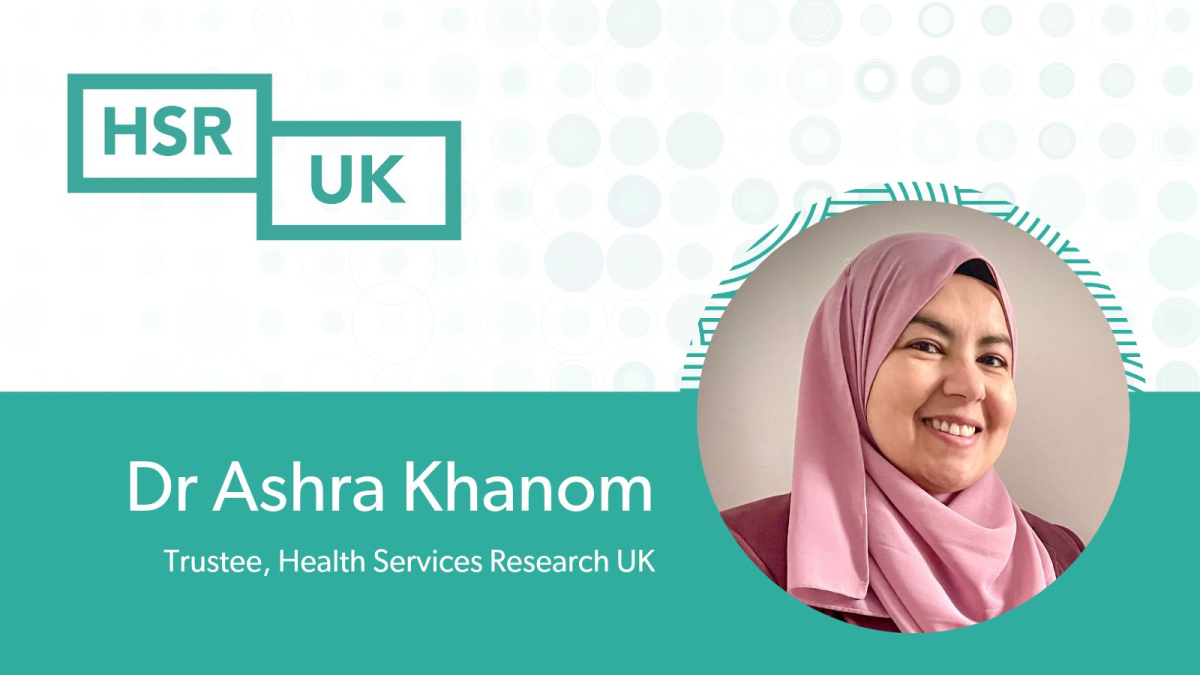
Dr Ashra Khanom, Public Health Researcher at Public Health Wales and Senior Academic with Swansea University.
Attending the HSR UK Conference gave me an opportunity to reflect on a question that feels increasingly important for the future of health and care research: how do we move from listening to action?
Across academia, the NHS and the wider research community, there is growing recognition of the need to hear the experiences of researchers from underrepresented backgrounds. As a woman from an ethnic minority background, I have welcomed these conversations. They create space for experiences that have often been overlooked and acknowledge that not everyone encounters the same opportunities, barriers or expectations throughout their career. However, listening alone does not create change.
Throughout my career, I have worked across academia, public health and community-based research. In many settings, I have been invited to contribute perspectives on equality, inclusion and community engagement. These opportunities have allowed me to share experiences and help shape discussions, but they have also prompted me to ask what happens next. How do organisations ensure that the insights they gather lead to meaningful improvements in the way research careers are supported and developed?
One of the strongest messages I took away from the conference was that improving research careers requires more than good intentions. Organisations often seek feedback, hold consultations and invite people to share their lived experiences. While these activities are valuable, their impact depends entirely on what follows. If people repeatedly share experiences of exclusion, unequal opportunities or barriers to progression without seeing any tangible change, trust can quickly be lost. This is particularly important for researchers from groups that have historically been underrepresented within leadership and decision-making structures. Too often, individuals are asked to contribute their perspectives but are given limited influence over the decisions that affect them. Being heard is important, but being able to shape outcomes is what ultimately drives change.
The conference highlighted the value of co-production as one way of addressing this challenge. At its core, co-production is about sharing power. It recognises that expertise comes in many forms and that the people most affected by policies and decisions should have a meaningful role in shaping them. While co-production is often discussed in relation to research projects, the same principles can be applied to research careers. Researchers with lived experience of barriers and inequalities have valuable insights into how systems can be improved, and organisations should create genuine opportunities for those voices to influence decision-making. I was particularly struck by examples of involving communities directly in identifying priorities and shaping policy responses. Rather than making assumptions about what different groups need, individuals from diverse communities were supported to undertake research, identify issues and contribute directly to solutions. This approach recognises lived experience as a form of expertise and demonstrates the importance of moving beyond consultation towards meaningful partnership.
The discussions also reinforced the importance of leadership. Leadership is often associated with senior roles, but creating inclusive research cultures requires leadership at every level. At the same time, organisational leaders have a particular responsibility because they control resources, set priorities and influence culture. They can create the conditions for change through transparent processes, accountability and a willingness to challenge established ways of working. For meaningful progress to occur, leaders must be prepared to ask difficult questions. Who progresses within our organisations? Who leaves? Who receives opportunities for leadership, development and recognition? Whose voices shape decisions? Answering these questions requires organisations to collect data, monitor progress and be honest about where inequalities persist.
Another theme that resonated with me was the importance of recognising contributions that are often invisible. Many researchers, particularly those from underrepresented backgrounds, undertake significant mentoring, outreach, public engagement and equality-related work alongside their formal responsibilities. These activities strengthen organisations, support colleagues and help build more inclusive environments. Yet they are not always recognised within traditional measures of success. If organisations are serious about inclusion, they need to value these contributions appropriately. The conference also prompted reflection on the way we talk about resilience. Researchers from marginalised backgrounds are frequently praised for their resilience and adaptability. While these qualities should certainly be celebrated, resilience should not become a substitute for action. The goal should not be to help individuals endure inequitable systems. Instead, we should focus on creating environments where people do not face unnecessary barriers in the first place.
Looking ahead, I find it useful to imagine what an inclusive health and care research system could look like in the future. I see a sector where leadership reflects the diversity of the communities it serves, where progression pathways are transparent, where lived experience is valued alongside professional expertise, and where researchers at all stages of their careers feel a genuine sense of belonging.
Most importantly, I see a system where listening routinely leads to action. The HSR UK Conference reminded me that improving health and care research careers is not simply about creating opportunities for people to tell their stories. It is about ensuring those stories influence decisions, policies and practices. Real change requires organisations to move beyond consultation, share power more effectively and be accountable for the outcomes they achieve. Listening is an important first step. But if we want more inclusive, equitable and sustainable research careers, this cannot be the end of the conversation. The real challenge is turning what we have heard into meaningful action.
We hope these reflections encourage researchers, leaders and organisations to consider how they can strengthen inclusive cultures, share power more effectively and ensure that lived experience helps shape the future of health services research careers.